‘It’s not about good or bad foods. It's about energy’: Heidi Holmlund on fueling
Nov 19, 2026·Inside FIS
Many parents of young athletes will recognize the scene: a big week of training or competition, nerves running high, and a plate of food left half eaten. For Heidi Holmlund, who spent years as a clinical dietitian with Norway’s women’s Cross-Country team, it’s a very common challenge, and one that needs a plan rather than a confrontation.
Now a senior consultant on Hele Laget (“The whole team”), a project run by Olympiatoppen and the Norwegian Olympic and Paralympic Committee and Confederation of Sports (NIF), Holmlund is bringing valuable lessons learned from the Tour de Ski and FIS Cross-Country World Cup to benefit schools, clubs, and families across Norway.
In the second of our three-part series on the project, which aims to prevent Relative Energy Deficiency in Sport (REDs) and disordered eating behavior among young competitive athletes, she talks to Inside FIS about low appetite, team culture, and why it’s better to start a difficult conversation one too many times than one too few.
Read part one of the series, featuring Hele Laget coordinator Stine Østvold Aamodt
Inside FIS: You spent many years as a clinical dietitian with Norway’s women’s Cross-Country team. What drew you to that work, and what did it involve day to day?
Heidi Holmlund (HH): Some of the top athletes in Norway are in Cross-Country skiing, and that’s why it was a top priority for Olympiatoppen to go into this sport. I joined the Cross-Country team in, I think, 2007, but it was not until about two years later that we could do really major work together. We realized that we couldn’t just go and lecture them on how to fuel during training or competition. There was so much more we needed to do before the culture could absorb this knowledge about fueling.
It’s important to say I didn’t go in by myself, I was part of a multidisciplinary support team. If you zoom out, my nutrition work was the food security around the hotel, the lunches, the breakfasts, and working with the chefs to make sure we had enough carbohydrates and enough of the food the athletes liked.
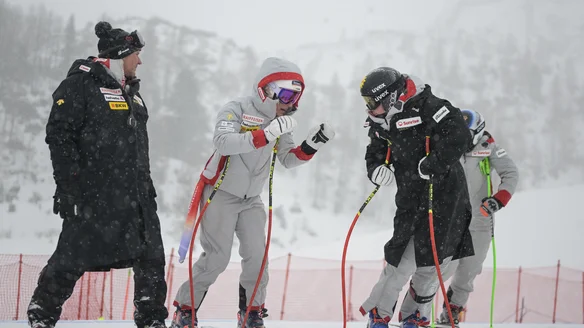
But if you zoom in, it was very important to spend a lot of time with the athletes. I was with them on altitude camps and training camps, at the Tour de Ski for many years and at World Cups. I tried to teach them not in a classroom, but in the field, to bridge the gap between theory and practice. In practice, everyone has something they like or dislike, or that their stomach is more sensitive to, so we needed to work out the nutrition plan for each individual athlete. And we didn’t just give them plans that they had to follow. We prepared them together. I was more of a nutrition coach than just someone they would consult.
Inside FIS: Most of your time went into the women’s team. Why was that the priority?
HH: That’s where we started to build this communication and performance culture. We needed a better communication culture around nutrition, psychology, body image, all sorts of things. If you don’t build this culture, you get a lot of misunderstandings, and a lot of things that maybe aren’t talked about openly. So, the coaches and the support teams that surround these athletes need to build this culture together with the athletes.
I’ve also worked in football for Molde FK for the last five years, and I’ve found that a different approach is needed with the women’s team and the men’s team. In a men’s football team, you have a lot of very good health and performance colleagues, and maybe also a more straightforward communication culture. In a women’s team you need to tackle things differently, but I also think that’s because a lot of coaches and support teams are male. It’s not so easy for a male coach to talk about body image and nutrition with a female athlete. They need to be educated about it, in a way.
Inside FIS: In terms of Cross-Country, how did the multidisciplinary approach help with fueling?
HH: We did what I would call a team process. We paid a lot of attention to sitting together and talking through difficulties with fueling, and thanks to this team process, the women fueled more. We also made rules, a kind of health certificate. If athletes didn’t fuel as much as we wanted, or they dropped in weight, they were stopped from training and stopped from competing. We worked out these rules together with all the support team, and now it’s a set of rules that the Norwegian Ski Federation uses with all its athletes.
If you’re not fueling enough, if you’re too low in weight, or if you’ve had a period where you haven’t eaten as much as you’ve burned in training, you need to stop. It’s a set of red lights, yellow lights, and green lights. I think we raised the bar in a way, so the athletes couldn’t fall down a small rabbit hole of “I don’t want to fuel, I’m not hungry.” They knew there were some boundaries.
Inside FIS: What were the typical signs, and what mistakes did athletes make by accident?
HH: When the stress was going up, the appetite was going down. That’s a big problem in elite sport: the stress of competition, nerves about everything, maybe also the media and social media. Sleep was going down, the stress was going up, and appetite was declining. Then you just need to eat, even if it’s mechanical. You need to make it a routine that you do every day, every time, every competition.
So sometimes I was the bad guy, saying, “You can’t leave this meal before you’ve eaten all this food.” They knew I meant well, but I think they were like, “Now Heidi’s there again. I need to eat.” The coaches also noticed that when I was at the training camps, the athletes ate more. It’s so easy to just say, “I’m not so hungry today.” It wasn’t only that they ate too little because they wanted to weigh less. It was mostly because they didn’t want the food, as there were so many other things going on.
Inside FIS: Altitude camps must make that even harder.
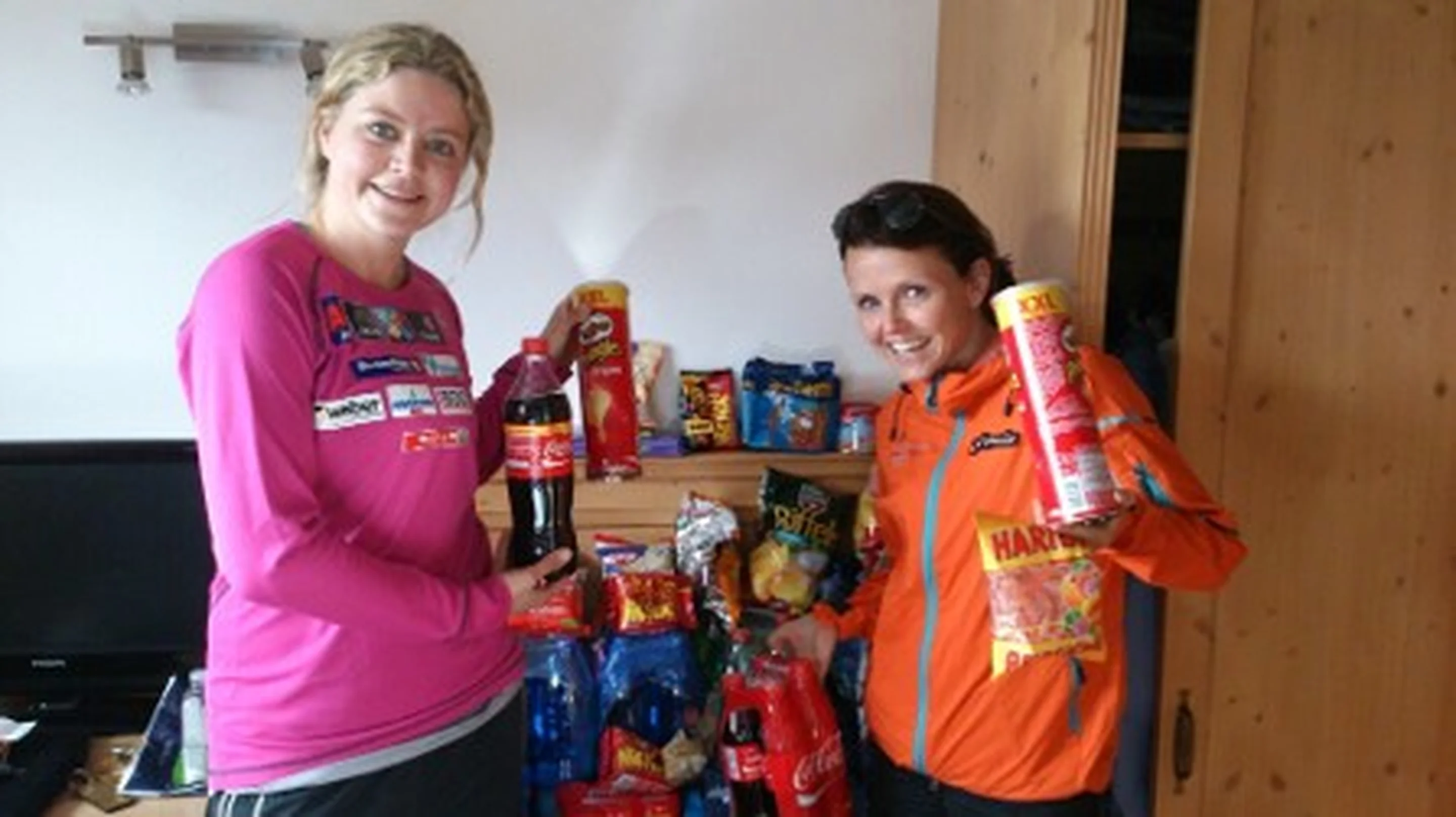
HH: One thing that’s for sure is that your appetite goes down at altitude. The oxygen goes down and the stomach goes crazy, so you need a plan for how to fuel more. We used a lot of sports drinks, smoothies, and shakes, because it was easier to get carbohydrates through drinks. But we also needed a lot of snacks, sweets, and soft drinks, things that are not in a nutrition book. That was a journey for me as well, to feel secure that I, as a clinical dietitian, could advise athletes to drink sodas and eat sweets.
Inside FIS: That must have felt like going against your religion…
HH: Yes, but now I’ve changed religion! I think a lot of parents are where I was in the first years. They really want to make healthy food for their kids, and it’s really important that their diet has healthy foundations. But in high-stress periods, like before competitions or at training camps, we need flexibility with nutrition. It’s not about good or bad foods. It’s only about needing energy, needing carbohydrates, and when the athlete is younger, we need quantity. We can’t get that quantity just with apples or pears. In a way it’s a psychological switch, being able to see that it’s not unhealthy to give unhealthy food. The healthy part is that they have enough energy.
Inside FIS: You also introduced a couple of nutrition rules in the team. What were they?
HH: One was, “We eat for performance, not for presentation,” because with social media, people are very into that. The other saying sounds better in Norwegian than in English, but it’s, “The talk around the table is not about the food on the table.” A lot of nutrition details were being shared around the table, like how many carbs are in pasta, or how much fat is in an avocado. We don’t need that around the table; we can get that from a lecture or a conversation. Together with the locker room, the table is the only place where they build relationships, so we need it to be a really good relationship-building area.
And with younger athletes, when one starts to say, “Oh, I don’t like the food,” often all the others start to say the same thing. So, another result of this rule was: if you don’t like the food, don’t bring it up at the table. Bring it to us afterwards, so we can talk to the chefs.
Inside FIS: How do you simplify your approach for young athletes in schools and clubs?
HH: You have the healthy foundations, the basic food that most of us know is good for us. But the first thing I try to teach them is that we need to build a good body image. We need a good relationship with food, and it starts up here, in the head. It doesn’t start with counting how many grams of carbs the glycogen stores need. It starts with: what are my feelings around my body, my weight, my food? We need to start there and be curious about the young athletes in front of us, so we build a good, positive body image first.
Then we can build flexibility into the nutrition plans, so they know: “We have three Cross-Country competitions this weekend in the youth cup, so I need to up my game with carbohydrates and sugar. That’s in the plan, and that’s okay.” Then they go back to the base foundations in other periods. So, a positive body image first, then flexibility.
Inside FIS: If parents or coaches are worried about an athlete, what would you recommend?
HH: If they’re worried, they need to take action now. They shouldn’t sit on the fence or think this is just a phase that will pass. But the action taken needs to be adapted to the athlete. You’re curious, you want the best for them, but it’s better to try not to confront it at a meal, in a competition, or during a stressful period when they don’t have an appetite. Just sit down and get some information from the young athlete about how they feel about their appetite and food, and maybe where they get information on social media.
You won’t get all the answers in the first conversation, so you need a second, a third, a fourth, and a fifth. If you get more concerned, you need to bring in health consultants, doctors, other nutritionists, or someone who can help. It’s better to start that conversation one too many times than one too few.
Inside FIS: What role can families play at home?
HH: A lot of parents and athletes think we’re going to talk a lot about food when we sit around the table. But one of the best things we see for preventing eating disorders in the family is eating one meal together every day. And if you have this meal together, it’s important that it’s a healthy environment. Not a lot of arguing about what to eat and not to eat, or whether it’s healthy or not. It’s about having a conversation about anything else except performance or healthy eating. It’s about building relationships.
Inside FIS: How long is Hele Laget scheduled to run, and what does success for the project look like?
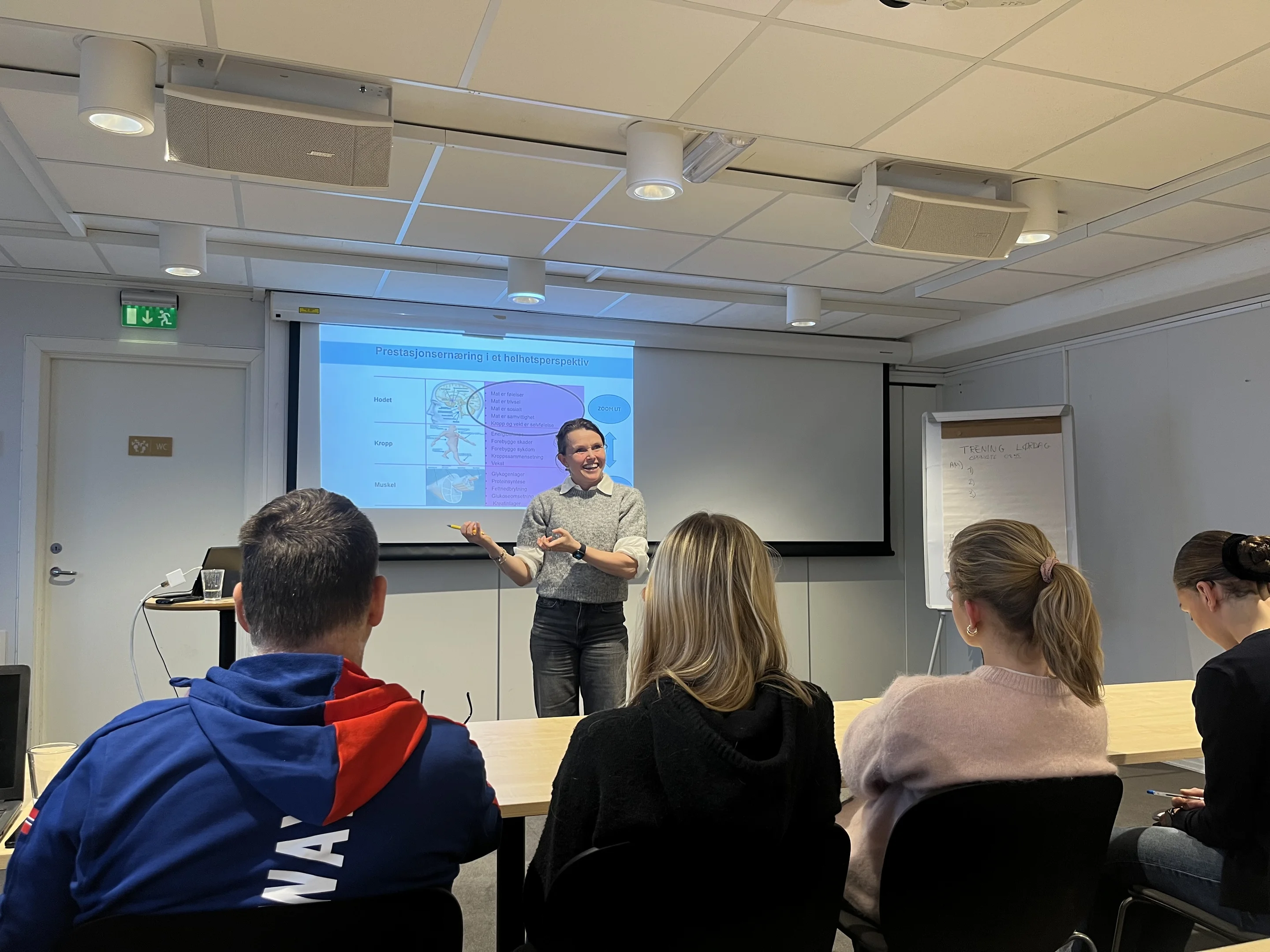
HH: We have funding until the summer of 2028. What’s important is that each sport, each sports school, and each club build a system to educate coaches, parents, and the team around the athletes, because we’re not working so much with the athletes directly. Our goal is that after the project, everyone working with young athletes with high training demands knows a little bit more about how to approach this topic and how to communicate with their athletes about it. Success is preventing more athletes from going into REDs or low energy availability.
Inside FIS: Stine also stressed the importance of working through coaches, parents, and support staff rather than athletes directly. Why does that matter?
HH: What we see in Norway is that clubs and sports, in a way, “outsource” fueling knowledge. They want a nutritionist to come in and give the athletes a lecture on carbohydrates, protein, and fat, or on REDs. But when the lecture is finished, no one in the club is following it up. Has it been a success?
So, we think it’s better that the coaches, parents, and support team have this knowledge and that they build a good communication culture. Then we can come in and give a lecture, no problem, because the knowledge stays in the club after we leave. The coaches and the support team are the main source of information for the athletes. They need a good understanding of how much fueling is needed at different development stages, and of the basic stuff, like fueling during training and having a recovery meal. When they’re worried, or think their knowledge isn’t enough, then they can bring in more expertise.
Inside FIS: Cross-Country icon Jessie Diggins (USA) has spoken openly about her eating disorder, including in her recent documentary Threshold. How important is that kind of openness?
HH: She’s been a role model in sport for openness about this, because it hasn’t always been easy to be open, especially about eating disorders. But something we worked on in the Cross-Country team process was the difference between openness within the team and openness in public.
We need a high level of openness within the team, but we don’t need all health problems to be openly out there, in public. What Jessie Diggins is doing is really, really good, because it’s good for other athletes to have a role model like that to look up to. But we cannot oblige every athlete to be that open, because it’s a private thing. So, for us, it’s very important to have this sensitivity and this balance.
Inside FIS: After all these years, what’s the lesson you keep coming back to?
HH: That the soft skills are maybe more important to have before you go into the hard skills of fueling. We have to have a good relationship with our body and with food. That’s the most important thing.
Find out more
More about Hele Laget (in Norwegian): idrettsforbundet.no/en/tema/hele-laget/om-krafttaket
Films on REDs, including one for Cross-Country, are available with English subtitles at: REDs - Star As You Are
FIS Sports Integrity resources: fis-ski.com/inside-fis/integrity