Warm-Up & Activation
Warming Up in the Cold - Respiratory Protection
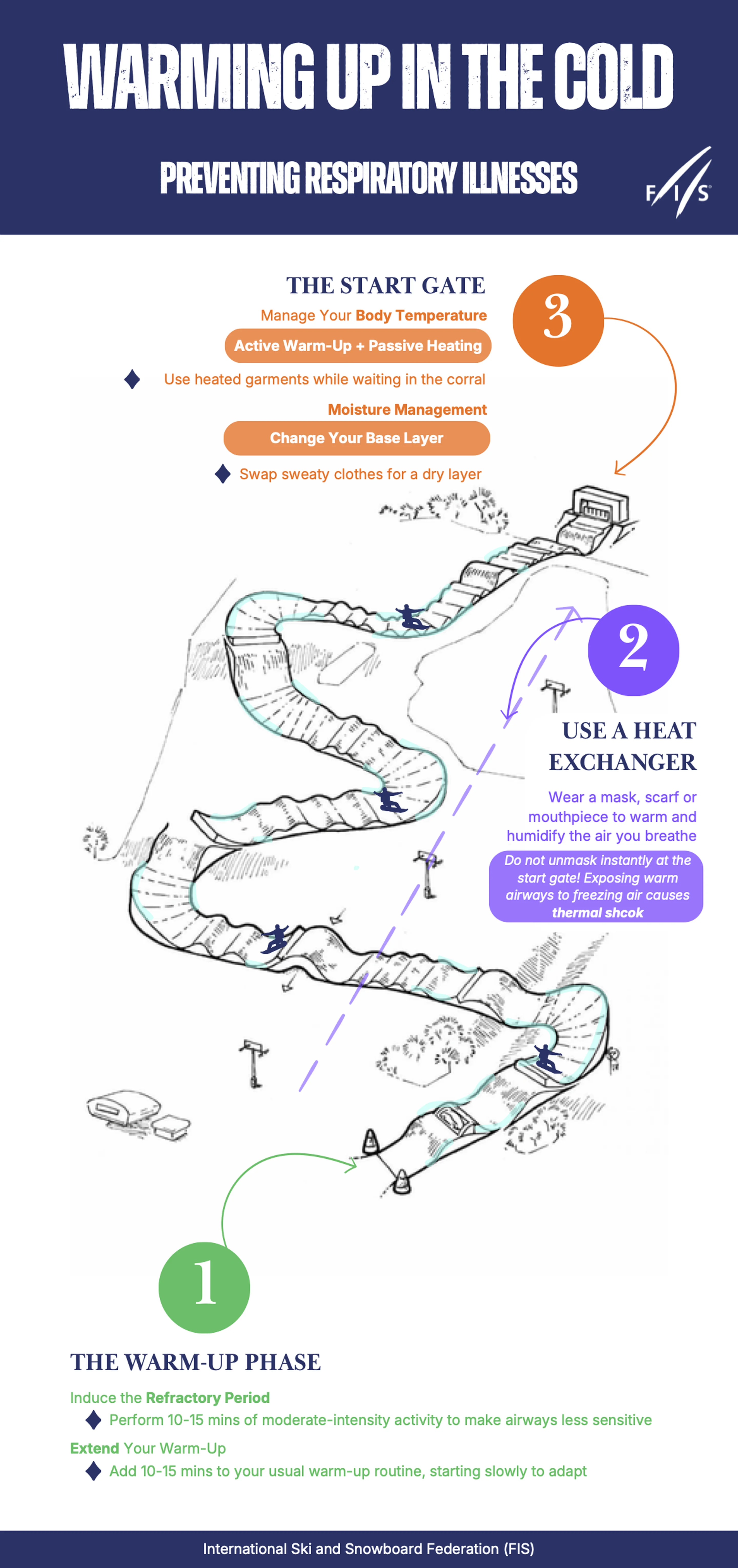
A primary medical goal of the warm-up in cold environments is to mitigate respiratory illness, specifically Exercise-Induced Bronchoconstriction and "race cough." Strategic warm-up protocols can protect airway health while preparing the body for competition.
Inducing the Refractory Period
A specific warm-up protocol can act as a preventive measure. Performing 10–15 minutes of moderate-intensity warm-up can induce a "refractory period" during which the airways become temporarily less sensitive to cold, dry air. This reduces bronchoconstriction severity during subsequent high-intensity competition. Athletes should extend warm-up duration 10–15 minutes longer than usual in cold conditions, beginning at a slower pace to allow the respiratory system to adapt gradually.
Heat and Moisture Exchangers
To protect against respiratory illness from inhaling cold, dry air, athletes often use Heat and Moisture Exchangers (HMEs): masks, scarves, or mouthpieces during warm-up, even when racing without them. HMEs humidify and warm inhaled air, providing necessary airway protection in borderline conditions. However, athletes should be aware that sudden exposure of pre-warmed airways to freezing air at the start line could potentially trigger a "thermal shock" response, the very reaction they are trying to prevent.
Managing the Restitution Phase
Preventing cold-related illness requires managing body temperature during the critical "restitution" or transition period between warm-up and event start. A standard active warm-up is insufficient if the athlete cools rapidly while waiting. Effective preparation combines active warm-up with passive heating strategies, such as heated lower-body garments during transition, to prevent rapid muscle temperature loss.
Managing sweat accumulation is equally vital. High-intensity warm-ups cause sweating; if moisture remains against the skin during the inactive transition, it can freeze or cause rapid cooling. Athletes should change base layers between warm-up and competition to ensure they begin with dry insulation against the skin.
Practical Recommendations: Respiratory Protection on the Slopes