#SnowStories: Adam Hall on six Paralympics and giving athletes a voice
Nov 04, 2026·Inside FIS
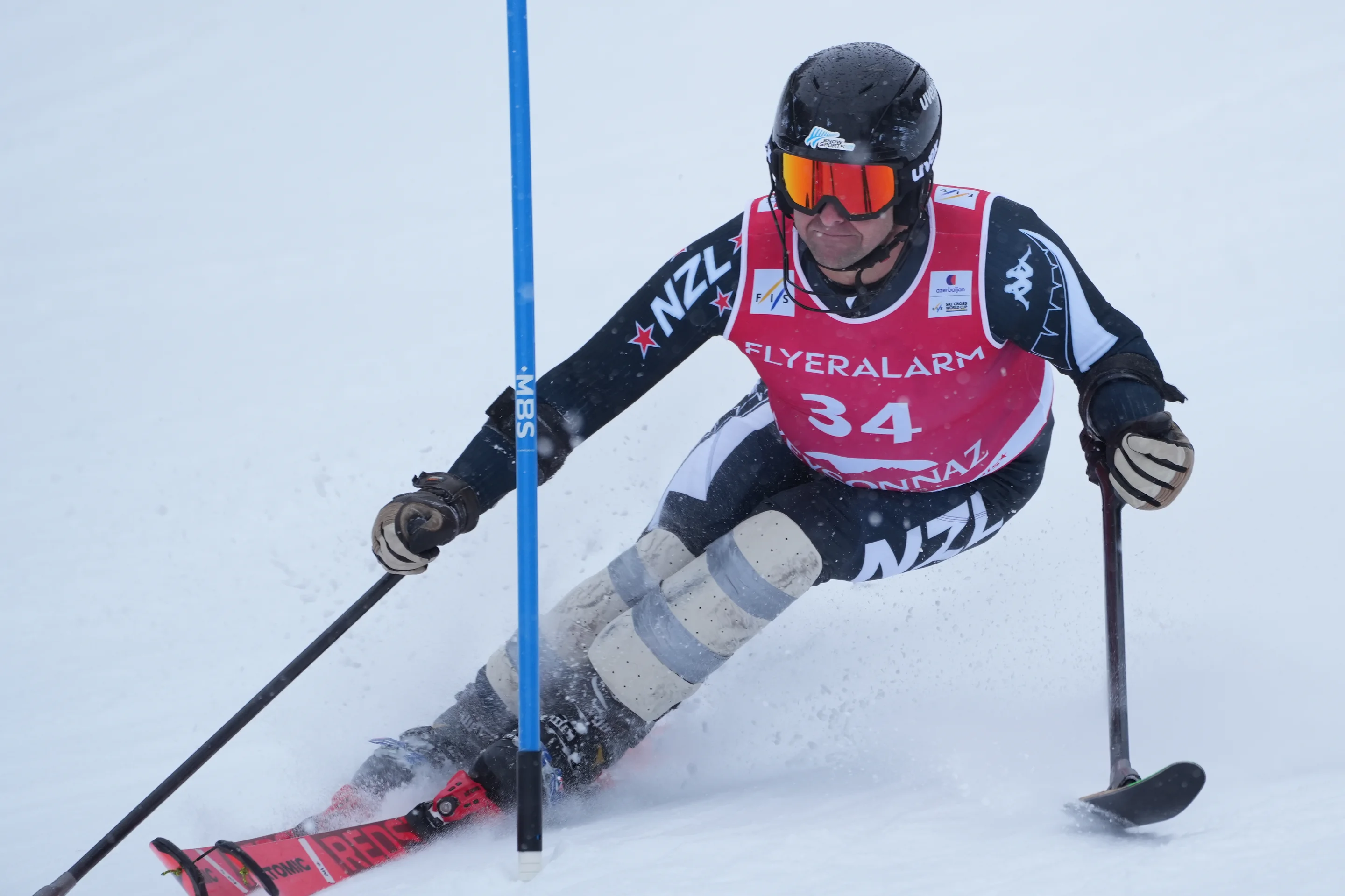
When you ask Adam Hall what it takes to represent athletes, he doesn’t start with meetings or motions. He starts with relationships with race directors, coaches, and fellow athletes, built over years on the circuit and often “outside of the room.” After more than two decades in Para Alpine skiing and six Winter Paralympic Games, winning six medals, including two golds, the New Zealander has had plenty of time to build them.
Hall now brings those relationships to the FIS Council, as a member of the FIS Athletes’ Commission, and to the International Paralympic Committee (IPC), as First Vice-Chairperson of its Athletes’ Council. In the first of a series of interviews with FIS Athletes’ Commission members, he spoke to Inside FIS about his career, the path that led him to athlete representation, and why it matters for athletes to have a voice.
Inside FIS: You’ve competed at six Paralympic Winter Games. How do you think you evolved, as a person and as an athlete, over that time?
Adam Hall (AH): That’s a difficult one to answer, reflecting on a career that’s over two decades long! From the outside looking in, with any athlete it’s easy just to see the successes or the podiums, but you don’t see the stuff that happens behind the scenes: the ups and downs, the failures, and trying to learn from them. You never have all the answers, but I feel like we’ve always approached things in a pretty good way, trying to keep ahead of the curve, always questioning ourselves, and trying to “make the boat go faster,” essentially.
My first campaign in Torino [2006] was a massive dream come true. I’d been a snowboarder up until 18 months previously, and to be able to get to the Games I changed back to skiing and qualified. Having achieved that, I felt brave enough to aim for the podium right away, but a lot of my competitors had been to a number of Games and had much more lived experience, like I do now. I quickly realized it was about learning from the best in the world, and that I had a more realistic chance of matching them in four years’ time in Vancouver. And that proved to be a successful Games [Editor’s note: Adam won gold in the Men’s Slalom, Standing], and another dream come true.
Four years later [in Sochi, Russia], I came away with a “rubber medal,” fourth place, and it was the opportunity to keep growing and my passion for the sport that kept me committed through to PyeongChang 2018. Getting back on the podium there with two medals [gold in the Men’s Slalom, Standing and bronze in the Super Combined, Standing], and also being recognized off the snow with the Whang Youn Dai Achievement Award*, was pretty amazing. That award is something I rate right up alongside any of my on-snow achievements.
Then I pushed on to Beijing and won two more medals, both bronze. Post-Beijing, I decided to drop all of my events and focus solely on Slalom, which has traditionally been my most successful event. It was a big risk, but that paid off as well. In Cortina, to come away with another medal and complete the set of the different colors was still pretty unbelievable. It’s something I still reflect on to this day, thinking, how on earth did that happen?
*[Editor’s note: the IPC presents the award to athletes who are fair, honest, and uncompromising in their values, and who prioritize the promotion of the Paralympic Movement above personal recognition.]
Inside FIS: You’re going to sit out the Northern Hemisphere season. Is that a choice to give your body and mind a rest?
AH: This New Zealand season started my 23rd season competitively. To be able to commit and head through to the French Alps, I think if I was to keep on going, eventually something’s going to give and you’re going to burn out. So, for me, it’s an opportunity to give the mind, body and soul a bit of a break from that pressure-cooker environment, and to spend more time at home with my family. That doesn’t mean I’m not going to be training or keeping on top of strength and conditioning, but it’s good to have a break from being on snow every now and again, and now’s the time to do it.
Inside FIS: You carried the New Zealand flag at Milano Cortina 2026, with your family there in attendance. How did that feel?
AH: Anytime you are a flag bearer, it’s a huge responsibility, a huge honor, to represent your country in that way. I was fortunate enough to have my wife on the ground in Cortina with our daughter and my best mate there too, so that was really cool.
My wife represented the US at two Winter Paralympic Games, so to have her there, on the other side of competition, has been a huge support with my journey. That’s one key part of the equation that has helped with my longevity. She’s had a pretty huge influence on where I am today.
Inside FIS: You joined the FIS Athletes’ Commission after the 2023 World Championships. How did it come about?
AH: Under the IPC, I sat on the athlete group within our Sport Technical Committees from about 2015. I got to the point where I was Vice Chair, and during COVID I took over from our Chair. After FIS took over governance of Para Alpine, Para Cross-Country, and Para Snowboard in July 2022, I made the decision to put my name forward during the first FIS Para World Championships in 2023, which is where the voting happens for all the sports within FIS.
Then between our three disciplines, we decide which two of the three of us are going to represent our cohort on the Athletes’ Commission and on the FIS Council. Initially, we were recognized as a non-Olympic discipline with just one representative, whereas an Olympic discipline has two representatives, a male and a female athlete. But that changed and aligned at the 2025 Congress, so now we have parity. Dani Aravich from Para Cross-Country and I are both on the Council and in the Athletes’ Commission.
Inside FIS: For athletes thinking about standing, how does the voting work?
AH: All our disciplines have World Championships coming up this season. For athletes who are wanting to be part of the Athletes’ Commission, the campaigns and the voting will all happen during the World Championships of each discipline. From that Athletes’ Commission, four athletes go on to the FIS Council: two Para and two able-bodied athletes, with one woman and one man from each. It’s a powerful voice at the top table, and it’s a way for athletes to channel their thoughts and proposals, and have a voice.
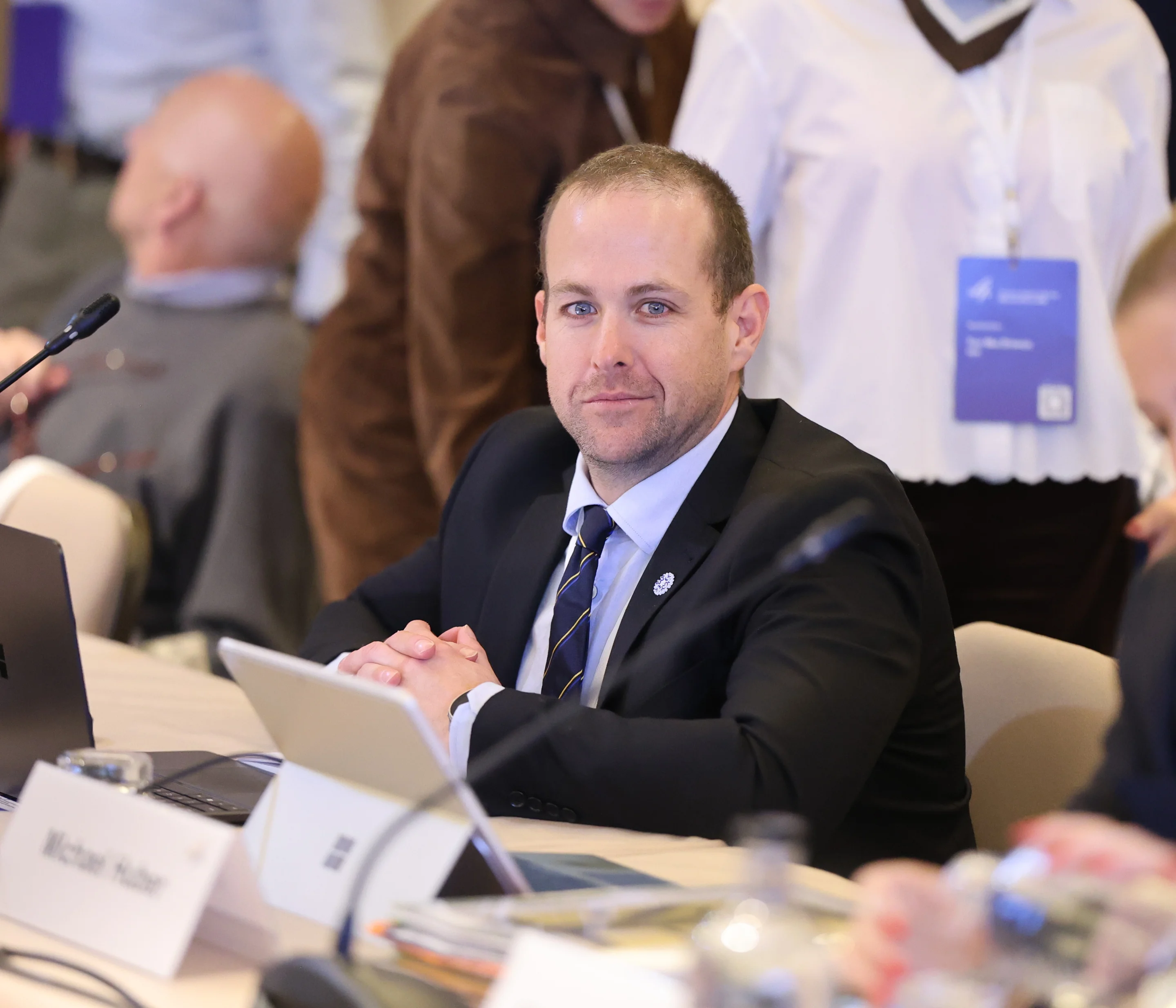
Inside FIS: You’ve held a lot of positions of responsibility. What qualities do you bring to the table?
AH: I guess I’ve been around a long time! I like to think personally that I don’t have any bias: I’m pretty straight, pretty neutral. In complex federations or membership organizations, it’s hard to keep every part of the family happy. Coming from New Zealand, I’m perhaps a little bit removed from a lot of the things that can go on in sport.
Being able to represent athletes from all regions and all sides, and to bring everybody’s points and ideas to the top decision table, has been important. If you want to see changes happen, it’s best to put your hand up and advocate the best that you can.
It’s not for everybody. There are lots of personalities involved, and it’s about not being intimidated by leadership or anyone else in the room.
Inside FIS: How much of the role comes down to relationships with race directors, coaches, and athletes on the circuit?
AH: I think it’s 100% about those relationships. That networking is key, and a lot of that relationship building quite often happens outside of the room. And when you’ve been around a long time, I think it perhaps shows the amount of respect that has been built up.
Inside FIS: How do athletes get their suggestions, comments, and queries to you?
AH: I look after Para Alpine, and then we have a Para Snowboard rep, and Dani, who’s on the Council with me, for Para Cross-Country. We communicate between the three of us, and then again within our own groups.
Para Alpine, for example, communicates through a WhatsApp group, across the different categories: Standing, Sitting, and Visually Impaired. We’ve found it to be quite useful for getting information out, but then also for information to flow back in. That way we can best represent ourselves at meetings, committees, and on the Council.
Inside FIS: Can you think of any specific changes you’re proud to have been involved in bringing about?
AH: That change from only having one representative to now having two. There are four athletes now on the FIS Council, including two Para athletes, and it brings a lot more athlete voice, advocacy, and power to discussions and voting.
In some ways, this has been a chance for me to give back and to eventually leave the sport in a better place than it was when I first came into it. First and foremost, you want to focus on the sport and love the sport. Then, if something like this interests you, put your hand up. It’s important for athletes to be able to have a voice and to advocate for change, for good.
Inside FIS: You’re on the IPC Athletes’ Council and the IPC Governing Board. What are you looking to achieve from that position?
AH: I’m there to advocate as much as I can from a winter sports perspective. We have nine summer representatives and three from winter, so again, quite a minority. It’s always important to keep neutral and to think of the whole family, from the big nations to the small ones. Whether that’s around inclusion and accessibility, or better pathways for athletes to qualify for the Paralympic Games, it’s about knowing that the pathway for North Americans or Europeans is just as good for, say, people from South America or the Pacific region, where I’m from.
Inside FIS: You’re working with two international organizations, but based out of New Zealand. Does the distance cause you issues?
AH: There’s definitely quite a bit of travel involved. But an email is pretty easy to fire away, and WhatsApp messages are pretty easy to fire away as well! There is quite a bit of commitment to try to do the job, and to do it properly. Sometimes the best way to get things done is showing up face to face, showing you’re present, and making sure people know you’re there representing everybody to the best of your abilities.